
A lot of companies talk about the importance of metal fabrication quality control which, of course, is expected. But a loftier goal is to provide quality assurance, a higher level of proactive rather than reactive product management that occurs throughout the production process.
One of the best ways to ensure quality is to have a thorough and well-documented inspection process at various production milestones. Here we’ll provide an overview of the numerous types of metal fabrication inspection methods to help provide quality assurance.
Prior to production, materials must be evaluated to ensure that they meet required specifications. Upon arrival, a metal fabricator will compare the packing slip to the purchase order (PO) to verify the material type, size, and thickness. The receiving team will also inspect for cleanliness and potential damage. Most importantly, they will verify material specifications and the Certificate of Conformance (CoC) to ensure it matches the customer’s PO requirements before being placed in inventory. CoCs often arrive after items are delivered, meaning that the materials may need to be placed in a holding area until verification is received.
In addition to raw materials, similar processes and CoC requirements are in place for coatings and heat treating performed by third party contractors. Paint used on metal fabricated parts is also considered materials and requires material certificates much the same as metals do. Elements of process verification include product shelf life, mixing, application and time between applications, thickness of film build, gloss, and more.
Effective equipment starts with properly calibrated measurement tools. Prior to using any piece of equipment, it is a best practice for operators to perform a visual inspection to detect any obvious issues. This typically includes using calipers or micrometers that need to be checked against a verification station with fixed, constant measurements.
Any measuring equipment that is used to verify a product’s dimensions must be calibrated at specified frequencies per ISO 9001:2015 certification. Preventative maintenance on equipment is typically performed in-house as specified by the manufacturer’s specifications, while more complex maintenance and inspections are likely performed by qualified third-party services.
At Fox Valley Metal-Tech, measuring equipment is picked up and inspected weekly by a third-party calibration service, then returned. In addition to company-owned equipment, it’s important to inspect and service any personal equipment that a welder or other craftsman might use at their workstation. A lot of communication and coordination is required to find the right cadence to ensure a worker’s production capabilities aren’t disrupted.
In addition to weekly external inspections, an authorized third party service provider visits the facility annually to calibrate company and personnel equipment due at that time, and larger in-house equipment, such as CNC equipment. All tools and equipment have expiration dates that coincide with the annual in-house calibration. The third party service provider can spend a week or more at the facility doing in-depth maintenance and calibration.
Prior to its first use, equipment is once again verified against standards that are placed throughout the facility. Daily inspections are an important part of quality assurance best practices. If a piece of equipment isn’t validated for a week or more and a variance is detected, there’s the potential that an entire week’s worth of work will be nonconforming and may need to be redone or fixed.
Non-destructive testing (NDT) is an analysis technique that detects surface defects without causing damage to the component, hence “non-destructive.” For the process at Fox Valley Metal-Tech, we perform internal visual inspections of weld joints, filet gauges, V-Wac gauges, a flashlight, mirrors, borescopes (for inside piping), and other equipment to detect potential wear or defects. At times, 5X magnification may be used when specified.
Other internal testing includes leak or pressure testing of equipment using closed flanges, valves, and air or water pressure. Internal inspectors will also provide a AS9102 First Article Inspection Report (FAIR), certifying that each unit was produced according to the customers' specifications when requested.
Another type of internal NDT inspects for dimensional precision. Geometric Dimensioning and Tolerancing (GD&T) is often applied to machined parts and critical weldments. Common tolerances are between .005 – .030 and .010 – .015. Numerous types of equipment are used to inspect parts dimensionally to ensure accuracy in compliance with the drawings. Just some of these tools include:
External non-destructive testing typically performed by a third party include:
In either regard — whether internal or external testing — the equipment used to perform the inspections must be certified and/or calibrated and all inspectors must be trained and certified to the respective NDT method.
A hold point is a temporary pause during a critical step in production to allow for verification of specifications. These hold points are specified by a customer’s contract and provided for in the part routing.
There are generally two types of external hold point inspections, including a Customer Source Inspection (CSI) conducted by the customer or a customer representative. The other type is a Government Source Inspection (GSI) which is typically required when supplying products for the Department of Defense. A GSI is usually conducted by a Defense Contract Management Agency (DCMA) of which there are different levels of oversight depending on the types of products. Nuclear projects, for example, require a Special Emphasis DCMA.
In general, hold points may be required to verify the following:
Controlling quality and assuring quality are two different things. With the exhaustive inspection and testing processes in place at Fox Valley Metal-Tech, you can be assured that the product that shows up at your door is precisely what’s indicated on the specifications. Indicating required hold points and inspections as part of the RFQ process can help estimators provide more accurate quotes. Be sure to download our RFQ checklist below with other considerations.
Subscribe for updates and relevant resources from Ravelin Defense.


.svg)
Subscribe for updates and relevant resources from Ravelin Defense.
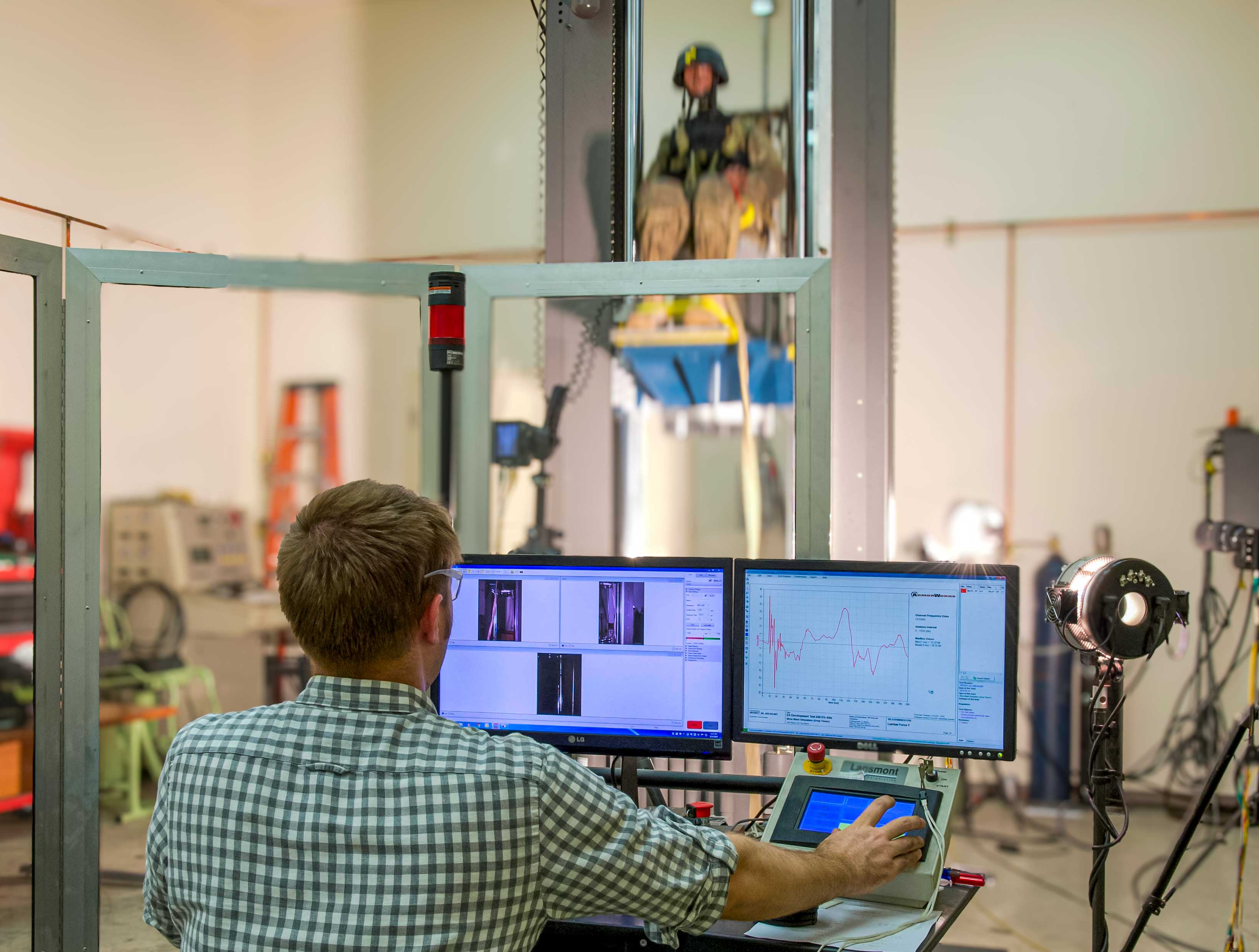
Getting capability to the warfighter faster requires more than speed at one stage. Commercial pace depends on moving from engineering and qualification into repeatable production as program demand increases.

ArmorWorks is Top Supplier for Bechtel 2024
.webp)



.svg)
